
Benefits of Green Roofs
Green Roofs offer many ecological and economical benefits. Whether your goal is to increase stormwater management, attain LEED points, protect your waterproofing, or enhance your ecological footprint, green roofs can help!
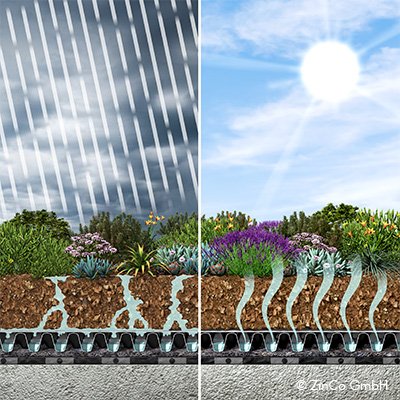
Stormwater Management
Depending on the green roof design, the immediate water run-off can be reduced by 50–90 %, greatly reducing drainage flow rates. This enables the rainwater management system to be reduced in capacity, thereby greatly reducing construction costs. In some areas this can also reduce sewer costs.
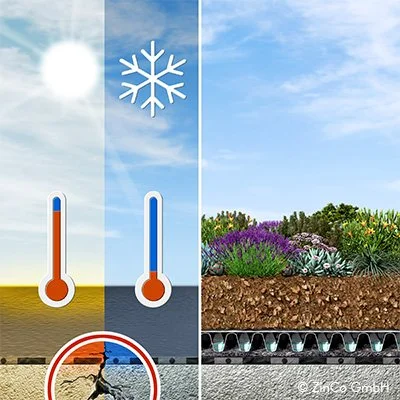
Waterproofing Membrane Protection
A green roof protects the waterproofing from climate extremes, UV exposure and mechanical damage. This greatly increases the life expectancy of the waterproofing and results in reduced maintenance and replacement costs.
Reduces Energy Costs
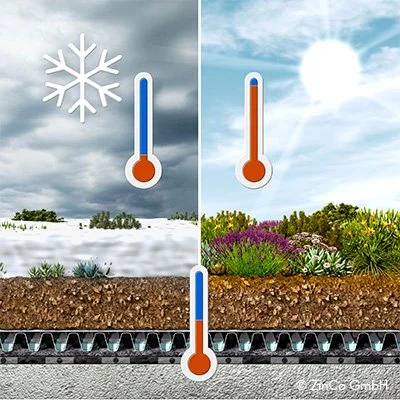
A green roof has the ability to buffer temperature extremes and improve the buildings energy performance. It acts as an additional insulation layer, reducing cooling costs in the summer and heating costs in winter.
Creates Usable Space

Converting or designing unused areas into green roofs, particularly for recreational or sporting use not only makes use of expensive space, but saves the costs of purchasing additional land. Green roofs often assist in gaining planning consent.

Increases Biodiversity and Habitat
Landscaped roofs compensate for green spaces, which are lost to building development. They provide natural habitats for wildlife and bring nature back into the cities.
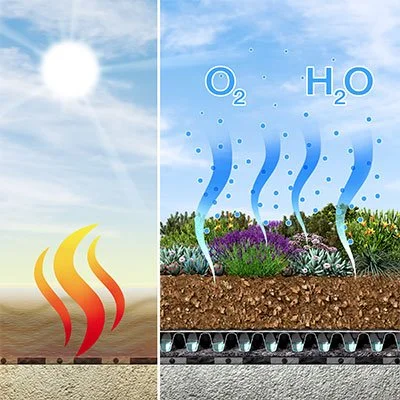
Reduces Urban Heat Island Effect
Green roofs cool and humidify the surrounding air. Thus, they create a beneficial microclimate within their immediate area and contribute to improving the microclimate in urban centres. Coordinated urban green roof development can significantly reduce the so-called “Heat Island” effect.
Reduces Air Pollution
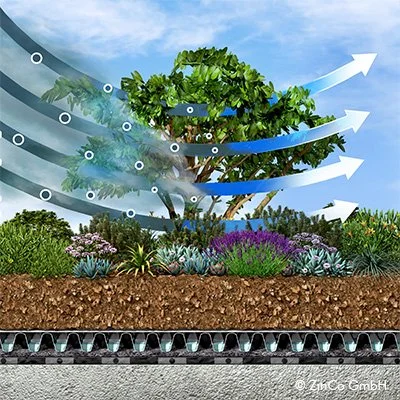
Green roof vegetation helps to filter out dust and smog particles. Nitrates and other harmful materials are absorbed by the plants out of the air and rainfall and bound within the substrate.
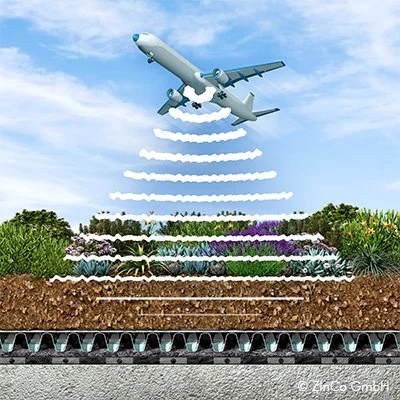
Reduces Noise Pollution
Planted areas are natural sound insulators and absorb more sound than hard surfaces. Green roofs reduce reflective sound by up to 3 decibels and improve sound insulation by up to 8 decibels. This is very effective for buildings near airports, noisy nightclubs and factories.
Supports Recycling
Green roofs make extensive use of recycled and recyclable products, saving further valuable resources. Rubber, polyethylene and expanded polystyrene rigid foam are used in the production of drainage elements. The mono clay material ZinColit® and humus are the basis for the production of ZinCo rooftop garden system soils. The most important criterion is the quality of the product, which is tested by recognized institutes and research bodies.